

Introduction
If you searched for herbciepscam, you’re probably trying to figure out whether a product, website, ad, or “special offer” connected to Herb Ciep is trustworthy or not. That’s a smart move. The internet is full of supplement promotions that look professional, sound convincing, and still end up costing people money with little to show for it. In this article, you’ll learn what people usually mean when they type herbciepscam, the most common warning signs to look for, how these offers typically work, and the safest steps you can take before you buy anything online.
1. What “Herbciepscam” Usually Means Online?

The keyword herbciepscam is often used when people suspect a supplement or herbal product offer might be misleading, overpriced, or connected to questionable billing practices. Sometimes it refers to a brand name, a product name, a landing page, or even a “free trial” promotion that later turns into a recurring subscription. In many cases, people are not asking if herbs are real—they are asking if the marketing, billing, claims, or website are honest.
2. Why People Search “Herbciepscam” So Often?
People usually search this keyword after one of these moments: they see a flashy ad on social media, they get pushed into a “limited-time” checkout page, they notice unclear terms, or they see unexpected charges after ordering. This happens frequently in the supplement world because products are easy to launch, ads can be targeted quickly, and buyers often make fast decisions when the marketing is emotional and urgent.
3. The Supplement Market Makes Scams Easier
The supplement industry is huge, and not every company is a scam. But the market has a problem: many products are sold with bold promises, vague ingredient explanations, and weak proof. Some sellers hide behind “natural remedy” language to imply medical benefits without clearly stating what you’re actually paying for. That’s why keywords like herbciepscam trend—people are trying to filter truth from hype.
4. Not Every Bad Product Is a Scam (But Many Are Misleading)
It’s important to separate three things: a product that doesn’t work for you, a low-quality product, and an actual scam. A scam usually involves deceptive tactics—hidden subscriptions, fake endorsements, fake reviews, false claims, or refusal to refund. A product can be disappointing without being illegal, but when a company uses tricks to get your card details and keep charging you, that’s when consumers start using terms like herbciepscam.
5. The Most Common Red Flags Connected to Herbciepscam Searches
When people worry about a possible herbciepscam, the same red flags appear again and again. Watch closely for: no clear company name, no real address, no phone support, weird email-only support, checkout pages with rushed timers, “limited supply” banners that never end, unclear pricing, and terms that are hard to find. If an offer feels like it’s trying to stop you from thinking, that’s usually not a good sign.
6. Fake “Doctor” or “Celebrity” Endorsements
One of the oldest tactics in questionable supplement marketing is using a doctor image, a lab coat, or a celebrity-looking person to build trust. Sometimes the names are made up, the photos are stock images, and the endorsements never happened. If you’re researching herbciepscam, take a minute to reverse-image search the person shown in the ad or on the website. If the same photo appears on unrelated sites, that’s a major warning sign.
7. “Scientific Breakthrough” Claims With No Real Proof
Many ads claim a formula is a “new breakthrough,” “clinically proven,” or “backed by science,” but they don’t link to real studies or they reference studies that don’t match the product. Real proof should be easy to verify, not hidden behind vague words. If the page has long stories, big promises, and almost no real data, that’s exactly the kind of pattern that causes people to search herbciepscam.
8. Before-and-After Photos That Look Too Perfect
Some supplement promotions use dramatic before-and-after images. These pictures can be edited, stolen, or taken from unrelated contexts. If every result looks extreme and instant, be careful. Real outcomes are usually mixed and slow, and honest brands do not need to rely on unrealistic photos to make sales.
9. “Free Trial” Offers That Turn Into Monthly Charges
This is one of the biggest reasons people look up herbciepscam. A website may advertise a “free trial” or “risk-free offer,” but the fine print can include a subscription that starts automatically. You might pay shipping today, then get billed later for the full price, and then billed again each month. If a brand is honest, it will clearly say: how much, when, and how to cancel—right on the checkout page in plain words.
10. Hard-to-Cancel Subscriptions and Confusing Refund Policies
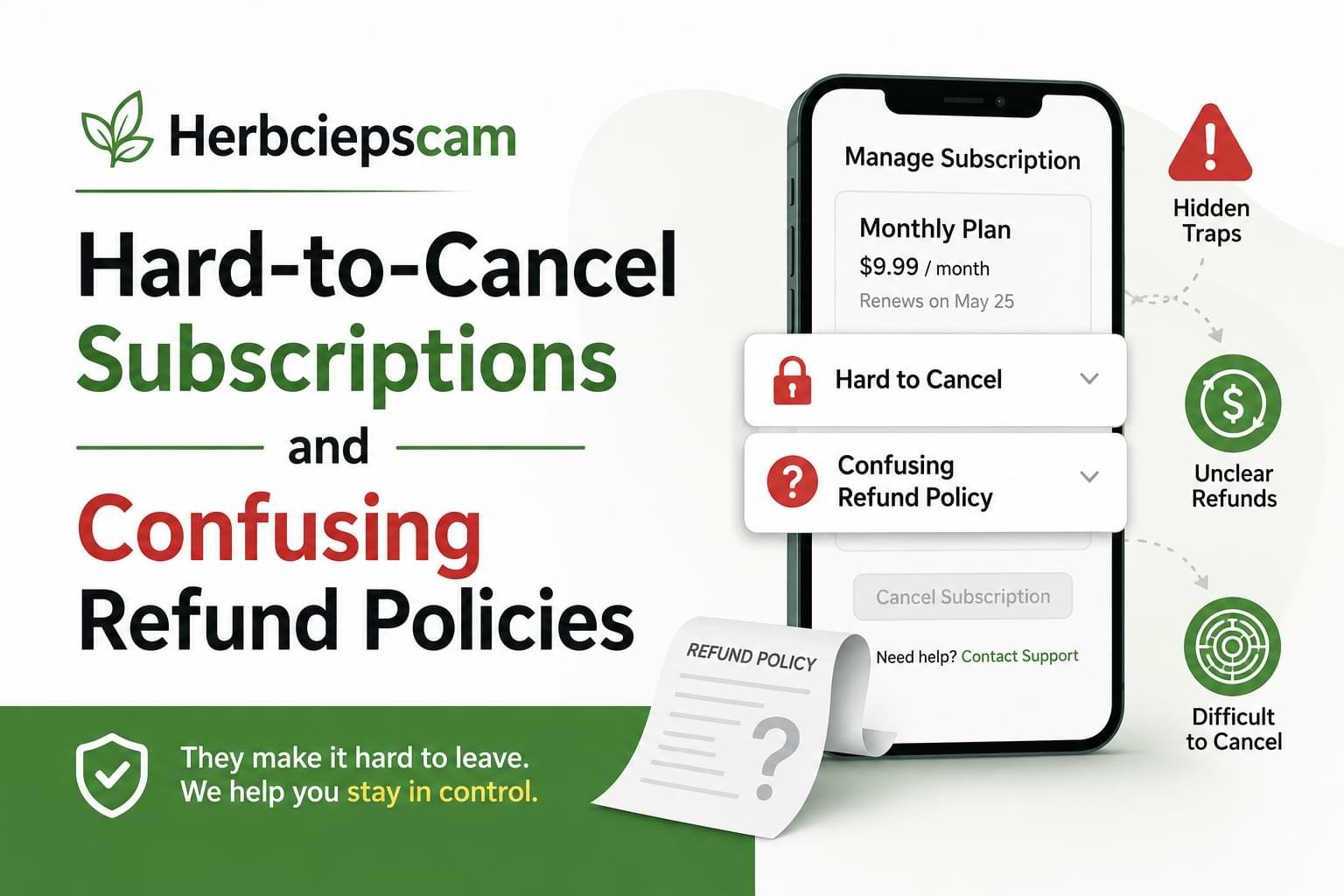
If the refund policy is written in confusing language, hidden in tiny links, or filled with rules that make refunds nearly impossible, take that seriously. Some companies require you to return unopened bottles, pay return shipping, or cancel within a narrow window you didn’t even know existed. A trustworthy business makes cancellation and refunds straightforward, not stressful.
11. Website Clues That Suggest a Potential Scam
A quick website check can reveal a lot. Look at the footer and see if there’s a real company name, real terms, a privacy policy, and customer service contact info. Check the domain age if you can. If a website looks new, has copied text, or uses the same layout as many other supplement sites, that’s not proof of a scam—but it is a clue that the operation might be temporary and focused on fast sales rather than long-term customers.
12. Payment and Checkout Warning Signs
When researching herbciepscam, pay attention at checkout. Are you being pushed to use unusual payment methods? Is the billing descriptor unclear? Are there extra “processing” fees added at the end? Are you being upsold aggressively with multiple pop-ups? Scammy operations often rely on confusion, fast clicking, and surprise totals.
13. The Truth About “Miracle” Herbal Claims
Herbs can support health in certain ways, but they are not magic. If a product claims it can cure diseases, replace prescriptions, or give guaranteed results for everyone, it’s using the kind of language that leads to disappointment and complaints. Honest sellers describe realistic benefits, who the product is for, and what results may vary.
14. How to Research Herbciepscam Claims the Right Way?
If you want to know whether an offer tied to herbciepscam is legit, don’t rely on one source. Search the brand name plus “reviews,” “complaints,” “refund,” and “billing.” Look for patterns, not one angry comment. Check if the company responds publicly and whether responses sound human or copied. Also search for the product images; many sketchy sellers reuse the same bottle design under different names.
15. How to Check Reviews Without Getting Fooled?

Many scam-like products have hundreds of glowing reviews that read like ads. Real reviews usually mention shipping time, packaging, customer service, taste, side effects, and realistic results. Be cautious if every review is perfect, short, and repetitive. Also be cautious if the only reviews exist on the seller’s website and nowhere else.
16. Safe Buying Tips If You Still Want to Try an Herbal Supplement
Even if you’re not sure whether herbciepscam applies to what you’re seeing, you can still protect yourself. Buy from well-known retailers with strong return policies. Use a credit card instead of a debit card when possible. Avoid “trial” offers unless you understand the exact terms. Take screenshots of the checkout page, the price, and the terms before you submit payment. This one habit alone can save you a lot of stress later.
17. What to Do If You Already Bought and Think It’s a Herbciepscam?
If you already purchased and suspect you were misled, act quickly. First, email customer support and ask for cancellation and a refund in clear words. Keep a copy of everything. If you see recurring charges, contact your bank or card issuer and ask about disputing the transaction. If your card was used without your clear consent, request a card replacement. Also monitor your statements for billing descriptors you don’t recognize, because some companies bill under different names.
18. Reporting a Suspected Herbciepscam
Reporting helps other people avoid the same problem. If you believe you found a herbciepscam, you can report the website or seller to consumer protection groups in your country, your payment provider, and the platform where you saw the ad. You can also leave a factual review describing what happened, focusing on billing, shipping, support, and refund behavior. Clear details matter more than anger.
19. How Honest Supplement Brands Usually Behave?
A legitimate brand usually has consistent contact details, transparent pricing, clear ingredients, realistic claims, and a return policy that’s easy to understand. They don’t hide subscriptions, they don’t pressure you with fake countdown timers, and they don’t pretend to be endorsed by people who never heard of them. When you compare honest brands to the kind of offers that trigger herbciepscam searches, the difference is usually obvious.
20.Conclusion!
The safest way to deal with herbciepscam concerns is to slow down, verify everything, and never buy based on pressure or hype. If the website is unclear about pricing, uses unrealistic claims, or makes cancellation difficult, treat that as a strong warning and choose a more transparent brand instead.
