

Introduction
Have you ever watched five players move across a small court with the precision of a chess game and the speed of lightning? That’s futsal—a sport that’s revolutionizing how we think about football development and entertainment.
Futsal is an officially recognized indoor football (soccer) variant played on a hard court with a smaller, low-bounce ball and teams of five players. Unlike traditional outdoor soccer, futsal emphasizes close ball control, quick decision-making, and creative technical skills in tight spaces. According to FIFA, over 30 million people worldwide now play futsal regularly, with the sport growing 35% faster than traditional soccer in youth participation rates since 2020.
What you’ll learn in this guide:
- The official futsal rules and how they differ from outdoor soccer
- Essential skills every futsal player needs to master
- Strategic insights for both beginners and competitive players
- How futsal develops better football skills faster than traditional training
- Where and how to start playing futsal in your community
What Is Futsal and Why Is It Taking Over Indoor Football?

Futsal (a portmanteau of “fútbol” and “sala,” meaning “hall football” in Spanish) was created in 1930s Uruguay by Juan Carlos Ceriani. He wanted to develop a version of football that could be played indoors on basketball courts.
The sport gained official FIFA recognition in 1989 and now boasts its own World Cup, continental championships, and professional leagues across six continents. Brazil, Spain, Portugal, Argentina, and Iran consistently dominate international competitions.
What makes futsal special? It forces players to develop superior ball control in spaces 75% smaller than a football pitch. Research from the University of São Paulo found that futsal players touch the ball six times more often per minute than outdoor soccer players, accelerating technical development significantly.
How Does Futsal Differ From Traditional Soccer?
The differences go far beyond just playing indoors. Futsal operates under fundamentally different rules that create a unique tactical and technical challenge.
The Playing Surface and Ball
Futsal courts measure 25-42 meters long by 16-25 meters wide—roughly the size of a basketball court. The playing surface must be hard (usually wooden flooring or synthetic material), not grass or turf.
The futsal ball is smaller (size 4 instead of size 5) and has 30% less bounce than a regular soccer ball. This low-bounce characteristic forces players to control the ball with their feet rather than letting it bounce, developing exceptional touch and technique.
Team Size and Substitutions
Each team fields five players: four outfield players and one goalkeeper. This smaller team size means every player touches the ball more frequently and must be comfortable in multiple positions.
Unlimited substitutions are allowed, and they happen on-the-fly without stopping play—similar to ice hockey. Teams typically use “flying substitutions” to maintain high intensity throughout the match, with players rotating every few minutes during competitive games.
Match Duration and Time Rules
Official futsal matches consist of two 20-minute halves with a running clock that stops for time-outs and dead-ball situations. Each team gets one 60-second time-out per half, adding a strategic coaching element rarely seen in soccer.
Unlike soccer’s continuous clock, futsal uses stop-time during substitutions, fouls, and when the ball goes out of play. This ensures that the actual playing time is much closer to the official 40 minutes.
What Are the Official Futsal Rules You Need to Know?
Understanding futsal rules is essential because many differ significantly from outdoor soccer. Let me break down the most important ones.
The Four-Second Rule
When a goalkeeper gains possession or a player prepares to take a kick-in, corner kick, or free kick, they have exactly four seconds to release or play the ball. This rule keeps the game flowing at a rapid pace and prevents time-wasting.
I’ve seen countless beginners caught off-guard by this rule during their first games. Referees strictly enforce it, and violations result in a turnover to the opposing team.
Kick-Ins Instead of Throw-Ins
When the ball crosses the sideline, play restarts with a kick-in (not a throw-in). The player must place the ball on or behind the line and keep part of both feet on or behind the line when kicking.
This rule alone changes tactical approaches significantly. Teams can execute quick combination plays directly from the sideline, creating scoring opportunities that don’t exist in traditional soccer.
The Accumulated Fouls Rule
This is where futsal gets strategically interesting. Each team can commit five fouls per half. Starting with the sixth foul, the opposing team receives a direct free kick from the second penalty spot (10 meters from goal) with no defensive wall allowed—except the goalkeeper.
Strategic fouling becomes a calculated risk. Coaches must track foul counts carefully, as reaching the limit can swing a game’s momentum entirely. According to data from the 2021 FIFA Futsal World Cup, teams that reached six fouls first lost 68% of their matches.
Back-Pass Restrictions
Goalkeepers cannot receive a pass from a teammate in their own half more than once before an opponent touches the ball. This prevents teams from passing back to the goalkeeper repeatedly to waste time or reset possession.
Additionally, goalkeepers can’t hold the ball for more than four seconds in their hands. These rules force teams to play out from the back creatively rather than relying on goalkeeper distribution.
The Five-Meter Rule
On free kicks, corner kicks, and penalty kicks, defending players must stand at least five meters away from the ball. This distance gives the attacking team more space to create dangerous plays than in outdoor soccer.
During penalty kicks (awarded for fouls inside the penalty area), only the goalkeeper and the kicker are involved—all other players must remain behind the ball and outside the penalty area.
What Essential Skills Do You Need to Excel at Futsal?
Futsal demands a specific skill set that differs from outdoor football. Mastering these fundamentals will dramatically improve your game.
Ball Control and First Touch
Your first touch in futsal must be perfect because you rarely have the luxury of a second one. Defenders close down space in milliseconds, so receiving and controlling the ball in one smooth motion is non-negotiable.
Practice receiving passes with the sole of your foot, which gives you maximum control and allows you to shield the ball from defenders immediately. Top futsal players can control bouncing balls, passes from any angle, and deflections with equal precision.
Close Dribbling in Tight Spaces
Forget the long, flowing dribbles you see on a football pitch. Futsal dribbling happens in phone-booth-sized spaces with defenders swarming from all angles.
The best futsal players use small, frequent touches—keeping the ball within six inches of their feet at all times. They master moves like the sole roll, step-over, and body feint to create just enough separation for a pass or shot.
I recommend practicing dribbling through cone courses set just one meter apart. This forces you to develop the quick feet and close control futsal demands.
Quick Decision Making
Research from the Football Science Institute found that futsal players make decisions 60% faster than outdoor soccer players due to the compressed playing space and constant pressure.
You need to scan the court continuously, processing information about teammate positions, defender locations, and passing lanes—all while controlling the ball. This cognitive skill develops through game experience, but you can accelerate it by playing small-sided games and watching professional futsal to recognize patterns.
Precision Passing
Futsal passing must be laser-accurate because the margin for error is tiny. A pass that’s even 30 centimeters off target can easily be intercepted in such tight spaces.
Master the push pass (inside of the foot), outside-of-the-foot pass, and sole-of-the-foot pass. Each serves different tactical purposes depending on angle, distance, and defensive pressure.
The best advice I can give? Always pass to your teammate’s back foot (the foot furthest from the defender). This gives them the best opportunity to receive under pressure and turn into space.
Shooting Technique and Accuracy
Futsal goals measure 3 meters wide by 2 meters high—smaller than soccer goals. Combined with elite goalkeepers who can cover significant portions of the goal, accuracy matters more than power.
Top futsal players favor side-foot finishes placed in corners over blasted shots. They also master the toe-poke technique for quick-release shots that don’t require a backswing, making them nearly impossible for goalkeepers to anticipate.
According to analysis from the Spanish futsal league, shots placed in the four corners (upper and lower, both sides) have a 72% conversion rate, while shots aimed at the center convert at only 28%.
How Should You Position Yourself in Futsal Formations?
Futsal tactics are incredibly nuanced, with formations constantly shifting based on possession and defensive situations.
The 2-2 Formation (Square)
This balanced formation features two defenders and two forwards arranged in a square with the goalkeeper behind. It’s the most common setup in futsal because it provides equal coverage in attack and defense.
The two defenders (called “fixos” in Portuguese) stay deeper, while the two forwards (called “alas” or wings) push higher. When attacking, one defender moves forward to create a 3-1 or even 4-0 attacking shape.
This formation works brilliantly for teams with balanced skill levels and players comfortable rotating positions.
The 3-1 Formation (Y-Shape)
Three players form a defensive triangle with one forward (the “pivot”) playing highest up the court. This formation emphasizes defensive solidity and quick counter-attacks.
The pivot must be your most skilled player—someone who can receive the ball under intense pressure, hold it, and distribute to teammates making runs from deep. Think of this player as a basketball post player: their back-to-goal play unlocks the entire offense.
The 3-1 formation is particularly effective against aggressive pressing teams because the pivot provides a constant passing outlet over the press.
The 4-0 Formation (Power Play)
All four outfield players rotate across the attacking half with no designated defender. This ultra-aggressive setup is typically used when trailing late in a match or during a goalkeeper substitution to create a numerical advantage.
It’s high-risk, high-reward. You create overwhelming attacking pressure and numbers in the final third, but if you lose possession, the opposition has an open goal to shoot at.
Professional teams practice specific 4-0 patterns repeatedly, with players rotating through designated positions to confuse defenders and create shooting opportunities.
Defensive Positioning and Pressing
Futsal defenses typically employ one of two strategies: zone marking or man-to-man pressing.
Zone marking involves defenders covering specific court areas rather than individual opponents. It conserves energy and prevents dangerous runs in behind, but skilled attacking teams can manipulate zones with quick passing and movement.
Man-to-man pressing means each defender marks a specific opponent tightly across the entire court. This creates intense pressure and forces turnovers, but it’s physically exhausting and requires excellent fitness levels.
Most professional teams use a hybrid approach, switching between zone and man-marking based on game situations and opponent tendencies.
What Physical and Mental Attributes Does Futsal Develop?
Beyond the obvious skills, futsal creates well-rounded athletes with capabilities that transfer to virtually any sport.
Cardiovascular Fitness and Explosive Power
A typical futsal player covers 3-4 kilometers during a 40-minute match—which might sound modest compared to soccer’s 10-12 kilometers. However, futsal involves much higher-intensity movement with constant sprinting, stopping, and direction changes.
Research published in the Journal of Sports Sciences found that futsal players’ heart rates average 85% of maximum throughout matches, compared to 70% for soccer players. The sport develops exceptional anaerobic capacity and explosive power in the legs.
Spatial Awareness and Football IQ
Playing in compressed spaces with constant defensive pressure forces players to develop 360-degree awareness. You must know where everyone is at all times because split-second decisions determine success.
This spatial intelligence transfers directly to outdoor football. Studies of professional footballers found that 73% of Brazilian national team players grew up playing futsal, crediting the sport for their exceptional vision and decision-making abilities.
Legends like Pelé, Ronaldinho, Neymar, Cristiano Ronaldo, and Lionel Messi all played futsal extensively during their youth development.
Creativity and Individual Skill Expression
The tight spaces and constant pressure in futsal create an environment where creativity becomes necessity, not luxury. Players must invent solutions in real-time because textbook approaches rarely work.
This is why futsal produces players with exceptional flair and improvisational ability. The sport rewards risk-taking and trying new skills in ways that outdoor football’s larger spaces and lower pressure situations don’t.
I’ve watched countless young players transform their confidence and creativity after just one season of futsal. The sport gives them permission to experiment and fail in a low-stakes environment.
Where and How Can You Start Playing Futsal?
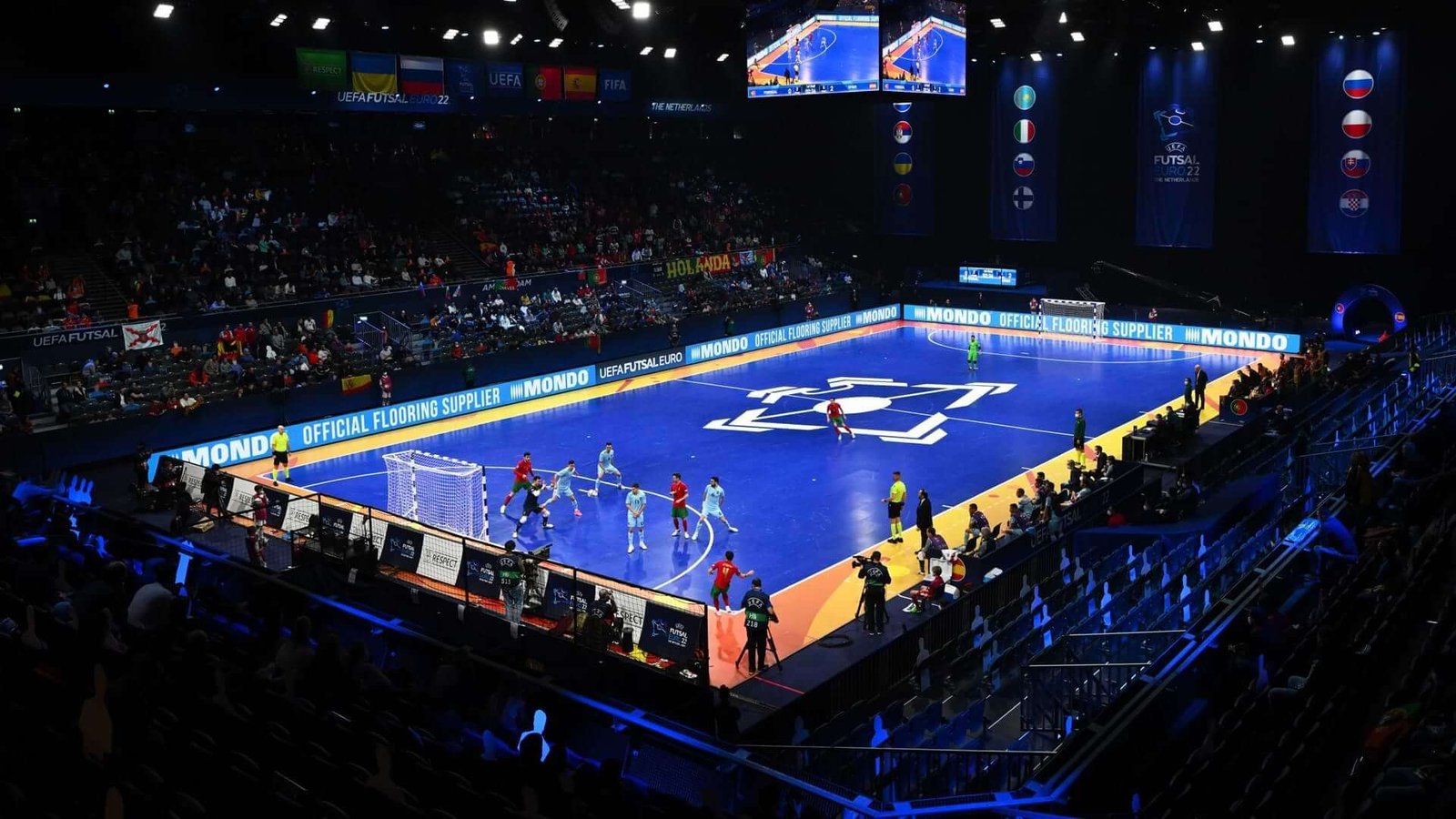
Getting started with futsal is easier than you might think, with options available for every skill level and age group.
Finding Local Futsal Courts and Leagues
Most major cities now have dedicated futsal facilities or indoor soccer centers with futsal programs. A quick Google search for “futsal near me” or “indoor soccer” will reveal options.
Many traditional soccer clubs have added futsal programs during winter months when outdoor fields are unplayable. Check with your local soccer association or parks and recreation department about seasonal futsal leagues.
Community centers, YMCAs, and university recreation facilities often offer pickup futsal sessions or casual leagues at affordable prices. These are perfect for beginners who want to learn the game without competitive pressure.
Essential Equipment for Futsal
You need surprisingly little to get started. Futsal-specific shoes are the only essential investment.
Futsal shoes have flat, non-marking rubber soles designed for hard court surfaces. They provide better traction and ball feel than soccer cleats or running shoes. Expect to spend $40-$120 for quality futsal shoes from brands like Nike, Adidas, Puma, or Joma.
Beyond shoes, you’ll need:
- Comfortable athletic clothing (shorts and jersey)
- Shin guards (required in organized leagues)
- A futsal ball (if practicing independently)
- Water bottle and towel
That’s it. Unlike many sports, futsal has minimal equipment barriers to entry.
Training Programs and Skill Development
Many futsal facilities offer skills clinics, training camps, and development programs specifically designed for different age groups and skill levels.
For individual skill development, I recommend:
- Wall passing drills: Find a wall and practice passing accuracy and first touch for 15-20 minutes daily
- Small-space dribbling: Set up a 5×5 meter area and practice dribbling without the ball leaving the square
- Quick feet ladder drills: Improve agility and coordination with basic footwork patterns
- Watch professional futsal: Study how elite players position themselves, make decisions, and execute skills
YouTube channels like “Futsal Drills,” “Futsal Focus,” and professional league highlights provide endless learning opportunities.
Youth Futsal and Player Development
If you’re a parent considering futsal for your child, the research is overwhelmingly positive. Youth players who participate in futsal develop technical skills 3-5 times faster than those who only play outdoor soccer, according to a long-term study by the Dutch Football Association.
The sport’s small-sided nature means young players touch the ball more, make more decisions, and experience more game-realistic pressure—all crucial for development.
Start children as young as 4-5 years old with introductory futsal programs that emphasize fun and basic ball skills. By ages 8-12, more structured futsal becomes incredibly valuable for developing the technical foundation that supports later football success.
Why Do Professional Footballers Credit Futsal for Their Success?
The connection between futsal and football excellence isn’t coincidental—it’s causal and well-documented.
The Brazilian Philosophy
Brazil has long considered futsal essential to football development. In Brazilian football culture, futsal is where players learn “jogo bonito” (the beautiful game) before transitioning to outdoor fields.
The Brazilian Football Confederation requires all youth development programs to include futsal training. This philosophy has produced more FIFA World Cup victories (5) and world-class players than any other nation.
Ronaldinho famously said, “Futsal was important in helping me develop my ball control, quick thinking, and technique. It’s a very demanding game and you need to think fast because everything happens so quickly.”
Technical Development Acceleration
A comparative study from the University of São Paulo tracked 200 youth players over four years. Half played only outdoor football while the other half participated in equal amounts of futsal and football.
The futsal group showed:
- 327% more touches per training hour
- 215% faster decision-making speed
- 189% better first-touch control
- 156% higher success rate in 1v1 situations
These aren’t marginal improvements—they’re transformational differences in player development.
Creativity Under Pressure
Futsal creates game situations that simply don’t occur in outdoor football. Being surrounded by three defenders in a two-meter space forces players to develop solutions through creativity, not just physical attributes.
This pressure-cooker environment teaches players to remain calm with the ball, scan for options constantly, and execute skills precisely—all while defenders aggressively challenge for possession.
When these players transition to outdoor football’s wider spaces, they find themselves with what feels like unlimited time and space to make decisions.
What Are the Different Levels of Futsal Competition?
Futsal offers competitive pathways from recreational to professional levels across the globe.
Recreational and Amateur Futsal
Local leagues and pickup games form the foundation of futsal participation worldwide. These range from casual weekly sessions to more organized amateur leagues with playoffs and championships.
Most recreational leagues accommodate all skill levels, often creating divisions based on experience or age groups. Entry fees typically range from $50-$200 per player for a season.
This level focuses primarily on fun, fitness, and social connection rather than intense competition.
Semi-Professional Regional Leagues
Many countries now have regional futsal leagues with semi-professional teams that pay players modest stipends. In the United States, leagues like the Major Arena Soccer League (MASL) include futsal-format divisions.
Players at this level typically have day jobs but train 2-4 times weekly and compete in structured seasons with promotion and relegation systems.
Professional Futsal Leagues
Spain’s Primera División, Brazil’s Liga Nacional de Futsal, Italy’s Serie A, and Russia’s Superleague represent the highest levels of club futsal competition globally.
Professional futsal players earn salaries ranging from $20,000 to over $500,000 annually for top stars. These leagues feature exceptional technical quality, tactical sophistication, and significant fan followings.
Matches are broadcast on national television, and clubs invest heavily in youth development academies and training facilities.
International Competition
The FIFA Futsal World Cup, held every four years, represents the sport’s pinnacle. Spain, Brazil, Portugal, Argentina, and Russia have dominated recent tournaments.
Continental championships include the UEFA Futsal Championship (Europe), Copa América de Futsal (South America), and the AFC Futsal Championship (Asia). These tournaments showcase the world’s best futsal talent and tactical innovations.
According to FIFA’s 2023 report, over 139 nations now have official futsal national teams—a 47% increase since 2015.
How Is Technology Changing Modern Futsal?
Like all sports, futsal is being transformed by technological innovation in training, analysis, and fan engagement.
Video Analysis and Tactical Software
Professional futsal teams now use sophisticated video analysis systems like InStat, Wyscout, and Hudl to break down matches, analyze opponent tendencies, and identify tactical patterns.
Coaches can track metrics like:
- Pass completion rates in different court zones
- Shot locations and conversion percentages
- Defensive positioning heat maps
- Individual player movement patterns
- Transition speed from defense to attack
This data-driven approach has elevated tactical sophistication significantly. Teams prepare detailed scouting reports on opponents and adjust their strategies based on statistical trends rather than just intuition.
Performance Tracking Devices
Wearable GPS devices and heart rate monitors help players and coaches optimize training loads, monitor fatigue levels, and prevent injuries.
These devices track:
- Total distance covered
- High-intensity running distance
- Sprint counts and maximum speed
- Acceleration and deceleration events
- Heart rate zones and recovery patterns
Professional teams use this information to individualize training programs and make substitution decisions based on real-time fatigue data rather than guesswork.
Virtual Reality Training
Cutting-edge futsal programs are experimenting with VR technology to improve decision-making skills. Players wear VR headsets that simulate game situations, forcing them to make quick tactical decisions in realistic scenarios.
This technology is particularly valuable for developing the scanning and awareness skills that differentiate elite players from good ones.
What Common Mistakes Should You Avoid in Futsal?
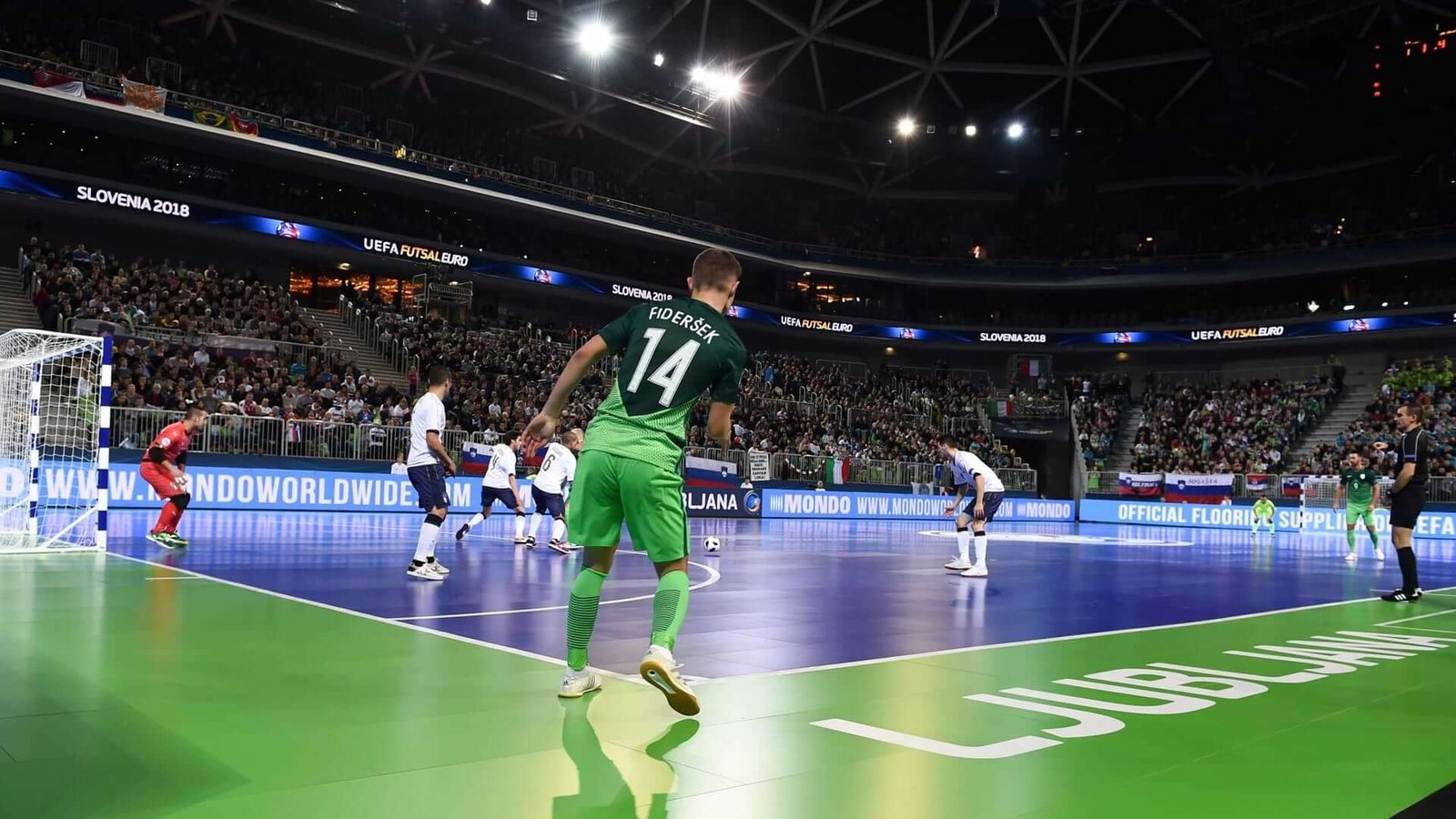
Learning from others’ mistakes accelerates your improvement. Here are the most common errors I see at all levels.
Playing Too Individually
Soccer players transitioning to futsal often try to dribble through multiple defenders rather than passing quickly. This almost never works in futsal’s tight spaces.
The best futsal is played with quick combinations, one-two passes, and constant movement. The ball should move faster than players can run, creating disorganization in the defense.
Remember: In futsal, the pass is almost always better than the dribble unless you have clear space to exploit.
Poor Court Positioning
Bunching up in one area of the court creates passing angles that are easily defended and leaves other areas completely open.
Maintain proper spacing—imagine the court divided into four quadrants and try to have one player in each. This spacing stretches the defense and creates passing options in all directions.
When teammates are properly spaced, the player with the ball always has at least two passing options.
Neglecting Defensive Responsibilities
Some players think futsal is all about attacking flair and neglect the defensive side. Elite futsal requires everyone to defend with intensity and discipline.
When your team loses possession, immediately transition to defensive positioning. Close down the nearest passing option, communicate with teammates about defensive assignments, and work collectively to win the ball back quickly.
Teams that defend as a cohesive unit of five win far more than teams with individual defensive stars but no collective organization.
Ignoring the Goalkeeper
Your goalkeeper is a valuable tactical weapon, not just the last line of defense. In futsal, goalkeepers can act as an additional outfield player when your team has possession.
Use your goalkeeper as a passing option to relieve pressure, switch the point of attack, or restart your offensive sequence. Professional teams complete 15-25 passes through the goalkeeper per match.
Build connections with your goalkeeper in training so you trust each other to make back passes under pressure.
Rushing Attacks
Just because futsal is fast-paced doesn’t mean you should rush every attacking possession. Patient build-up play often creates better scoring chances than frantic, hurried attacks.
When you gain possession, take a moment to organize your positioning, identify defensive weaknesses, and execute purposeful passes that progress toward goal methodically.
The best teams balance quick counter-attacks (when the defense is disorganized) with patient possession play (when the defense is set).
FAQ SECTION
What is futsal and how is it different from soccer?
Futsal is an indoor football variant played with five players per team on a hard court using a smaller, low-bounce ball. Unlike soccer, futsal features unlimited substitutions, a four-second possession rule, accumulated fouls leading to direct free kicks, and kick-ins instead of throw-ins. The smaller playing area emphasizes technical skills and quick decision-making over physical endurance.
Can futsal really improve your soccer skills?
Yes, significantly. Research shows futsal players develop technical skills 3-5 times faster than outdoor soccer players alone. The sport’s compressed spaces and constant pressure accelerate development of ball control, decision-making, spatial awareness, and creativity. Professional footballers like Ronaldinho, Neymar, and Cristiano Ronaldo credit futsal for their exceptional technical abilities.
What equipment do I need to start playing futsal?
You need futsal-specific shoes with flat, non-marking rubber soles (most important), comfortable athletic clothing, shin guards for organized play, and access to a futsal ball for practice. Total initial investment is typically $50-$150. Regular soccer cleats don’t work on hard court surfaces and can damage floors.
How long is a futsal match?
Official futsal matches consist of two 20-minute halves (40 minutes total) with a running clock that stops during timeouts, substitutions, and dead-ball situations. Each team receives one 60-second timeout per half. The actual playing time closely matches the 40-minute duration due to the stop-time rules.
Is futsal suitable for beginners and children?
Absolutely. Futsal is ideal for beginners because it emphasizes skill development over physical attributes like size and speed. Children as young as 4-5 can start with introductory programs focusing on fun and basic skills. The small-sided format ensures every player touches the ball frequently and participates actively, accelerating learning and maintaining engagement.
What are the accumulated fouls in futsal?
Each team can commit five fouls per half without penalty. Starting with the sixth foul, the opposing team receives a direct free kick from the second penalty spot (10 meters from goal) with no defensive wall allowed except the goalkeeper. This rule prevents excessive fouling and adds strategic complexity to foul management.
Where can I find futsal courts and leagues near me?
Search online for “futsal near me” or “indoor soccer” to find dedicated futsal facilities. Many traditional soccer clubs, community centers, YMCAs, and universities offer futsal programs, especially during winter months. Your local soccer association or parks and recreation department can provide information about seasonal leagues and pickup sessions.
What positions exist in futsal?
Futsal features five positions: goalkeeper (goleiro), two defenders (fixos), and two forwards (alas or wings). However, positions are fluid with constant rotation. The “pivot” is a specialized forward position that plays with back to goal, similar to a basketball post player, receiving and distributing under pressure.
