

Introduction
Scaling a business online isn’t just about getting more website traffic or posting on social media. It’s about building sustainable growth systems that turn your digital presence into a revenue-generating machine. If you’re looking to scale your business online with Garage2Global, you’re exploring a strategic approach that combines technical expertise, marketing intelligence, and proven growth frameworks.
Whether you’re a local business wanting to reach national customers or an established company ready for global expansion, online scaling requires the right mix of technology, strategy, and execution. This guide walks you through exactly what it takes to grow your business beyond its current limitations using digital channels.
Business expansion online has become essential, not optional. Companies that master digital scaling gain competitive advantages, reach wider audiences, and build more resilient revenue streams. The question isn’t whether to scale online—it’s how to do it effectively without wasting time and resources.
What You’ll Learn
- The fundamental differences between growing and scaling a business online
- Core digital pillars every scaling business needs in place
- How specialized agencies like Garage2Global accelerate online expansion
- Practical marketing strategies that drive measurable growth
- Technical requirements for handling increased online demand
- Success metrics that actually matter when scaling
- Common pitfalls and how to avoid expensive mistakes
What Does It Mean to Scale Your Business Online?
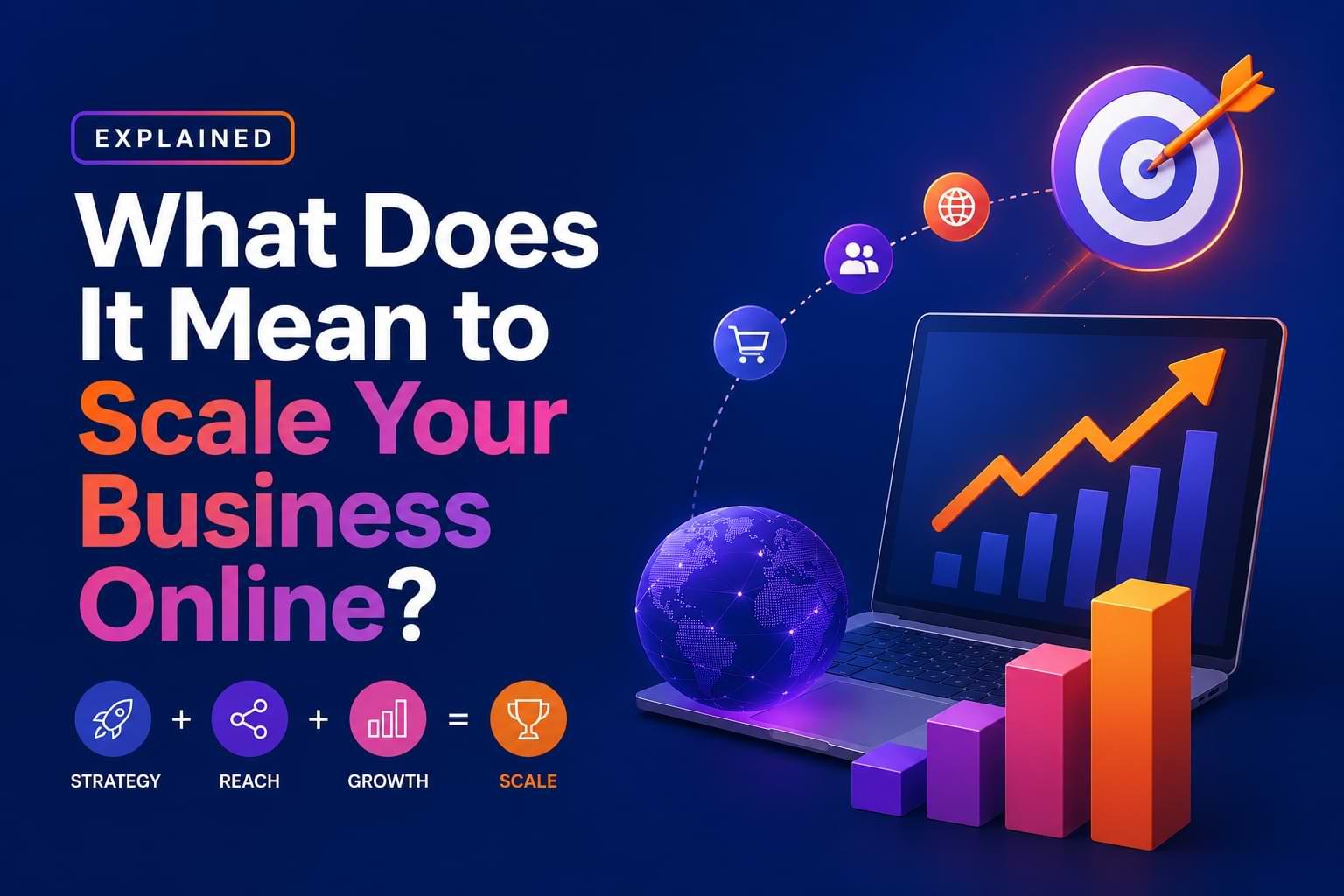
Scaling means increasing revenue without proportionally increasing costs. It’s different from simple growth.
When you grow, you add $10,000 in revenue but might spend $8,000 to get it. When you scale, you add $10,000 in revenue while spending only $2,000. Online scaling leverages digital tools, automation, and strategic reach to serve more customers without dramatically expanding your team or overhead.
Growth vs. Scaling: Understanding the Difference
Growth is linear. You hire more salespeople to make more sales. You open another location to serve more customers. Your expenses rise in direct proportion to your revenue.
Scaling is exponential. You create systems that work for you. A well-optimized website serves thousands of customers simultaneously. An email automation sequence nurtures leads while you sleep. Content you publish once continues attracting customers for years.
The Digital Advantage
Digital channels offer unique scaling opportunities:
Unlimited reach. Your website can serve one customer or one million without needing physical expansion.
24/7 availability. Your online presence works around the clock, across time zones, without additional labor costs.
Data-driven decisions. Digital platforms provide detailed analytics that show exactly what works and what doesn’t.
Automation potential. Marketing, sales, and customer service processes can be partially or fully automated.
Lower barriers to entry. Reaching new markets online costs significantly less than traditional expansion methods.
Why Businesses Are Moving from Local to Global Markets
The internet has eliminated geographic boundaries for most businesses. A company in Ohio can serve customers in Ontario, California, or Singapore with equal ease.
Market expansion used to require substantial capital investment. You needed physical locations, local partnerships, and region-specific infrastructure. Today, business expansion online requires a strong digital foundation and smart marketing.
The Pandemic Acceleration
COVID-19 forced digital transformation across industries. Businesses that survived and thrived were those that quickly established effective online operations. This shift is permanent.
Consumers now expect seamless online experiences. They research products online, compare options across multiple websites, read reviews, and often complete purchases digitally—even for local services.
Competitive Pressure
Your competitors are already online. If customers can’t find you through search engines or social media, they’ll find someone else who meets their needs.
Local businesses compete with national brands. National brands compete globally. The playing field has leveled in some ways, but only for businesses that understand how to leverage digital channels effectively.
Economic Efficiency
Online scaling offers superior economics compared to traditional expansion:
- Lower customer acquisition costs through organic search and content marketing
- Reduced overhead without physical location requirements
- Access to global talent pools for remote work
- Ability to test new markets with minimal investment
- Faster iteration and optimization cycles
The Core Pillars of Online Business Scaling
Successful online scaling rests on four foundational pillars. Weakness in any area limits your growth potential.
1. Search Engine Visibility (SEO)
If potential customers can’t find you through search engines, you’re invisible to a massive audience actively looking for solutions you provide.
SEO isn’t about tricks or shortcuts. It’s about creating genuinely valuable content, optimizing technical performance, building authority, and earning trust from both users and search engines.
Strong SEO delivers compound returns. Unlike paid advertising that stops working when you stop paying, organic search rankings continue delivering traffic and leads over time.
2. High-Converting Web Properties
Your website is your digital headquarters. It needs to accomplish several goals simultaneously:
- Make strong first impressions that build trust
- Clearly communicate your value proposition
- Guide visitors toward desired actions
- Load quickly on all devices
- Provide excellent user experience
- Convert visitors into leads and customers
A beautiful website that doesn’t convert is just expensive art. A high-converting website that loads slowly or looks unprofessional won’t gain visitor trust. You need both form and function.
3. Strategic Digital Marketing
Visibility without strategy wastes resources. Strategic marketing means:
- Understanding your ideal customer deeply
- Creating content that addresses their specific needs
- Choosing channels where your audience actually spends time
- Developing consistent messaging across platforms
- Implementing systems for lead nurturing and conversion
- Continuously testing and optimizing campaigns
Different businesses require different marketing mixes. B2B companies might emphasize LinkedIn and content marketing. E-commerce brands might focus on Instagram and Google Shopping. Service providers might prioritize local SEO and review management.
4. Scalable Technology Infrastructure
Your technology stack must handle growth without breaking. This includes:
- Hosting that manages traffic spikes
- Secure, reliable payment processing
- CRM systems that organize customer data
- Email platforms that grow with your list
- Analytics tools that provide actionable insights
- Automation systems that reduce manual work
Technology choices early in your scaling journey impact your capabilities later. Building on shaky foundations creates expensive problems down the road.
How Garage2Global Helps Businesses Expand Online
Garage2Global specializes in taking businesses from limited local presence to global digital reach. The name itself reflects this mission: transforming garage-sized operations into globally competitive enterprises.
Comprehensive Digital Strategy
Most businesses don’t need random marketing tactics. They need cohesive strategies where every element supports overall growth objectives.
Garage2Global starts with understanding your business model, target customers, competitive landscape, and growth goals. This foundation informs every subsequent decision about technology, marketing, and optimization.
SEO Expertise for Long-Term Visibility
Search engine optimization is central to sustainable online scaling. Garage2Global’s SEO services focus on:
Technical SEO. Ensuring your website meets search engine requirements for crawling, indexing, and ranking. This includes site speed optimization, mobile responsiveness, structured data implementation, and fixing technical issues that limit visibility.
On-Page Optimization. Creating content that satisfies user intent while incorporating strategic keyword targeting. This means understanding what your customers actually search for and delivering answers better than competitors.
Authority Building. Developing your online reputation through quality backlinks, brand mentions, and topical authority. Search engines reward websites that demonstrate expertise and trustworthiness.
Local SEO. For businesses serving specific geographic areas, optimizing for local search results, Google Business Profile management, and location-based visibility.
Web Development That Scales
A website that works for 100 monthly visitors might collapse under 10,000. Garage2Global builds web properties designed for growth:
- Clean, scalable code architecture
- Performance optimization for fast loading
- Security measures that protect business and customer data
- Responsive design that works across all devices
- Conversion optimization built into design decisions
- Easy content management for ongoing updates
The development process balances current needs with future scalability. You don’t want to rebuild your entire website six months into your growth journey.
Integrated Digital Marketing Services
Effective scaling requires multiple marketing channels working together. Garage2Global offers:
- Content marketing that attracts and educates potential customers
- Social media strategy and management
- Email marketing and automation
- Paid advertising management (PPC, social ads)
- Conversion rate optimization
- Analytics and reporting
Each channel reinforces others. Content supports SEO. SEO traffic feeds email lists. Email nurtures leads to conversion. Paid ads complement organic visibility. Everything works toward common business objectives.
The Garage2Global Approach to Business Expansion Online
The methodology focuses on three phases:
Foundation. Audit current digital presence, identify gaps and opportunities, establish proper tracking and analytics, set clear objectives with measurable targets.
Growth. Implement technical improvements, create and optimize content, launch marketing campaigns, build authority and visibility, generate qualified leads.
Scale. Automate successful processes, expand to new markets or offerings, optimize for efficiency and ROI, systematize operations for sustainable growth.
This structured approach prevents common scaling mistakes like expanding too quickly without proper systems or investing heavily in tactics that don’t support long-term objectives.
Essential Digital Marketing Strategies for Growth
Scaling your business online requires strategic marketing across multiple channels. Here are the most effective approaches for sustainable growth.
Content Marketing for Authority Building
Quality content serves multiple purposes. It attracts organic search traffic, demonstrates expertise, educates potential customers, and supports sales conversations.
Effective content marketing isn’t random blog posts. It’s strategic creation of content assets that:
- Answer questions your customers actually ask
- Address pain points at different stages of the buyer journey
- Establish your business as a trusted authority
- Provide value that competitors don’t offer
- Include clear paths to next steps
The best content generates compounding returns. A comprehensive guide published today can attract customers for years, especially when properly optimized for search engines.
Search Engine Marketing (SEM)
While organic SEO builds long-term visibility, paid search advertising delivers immediate qualified traffic. SEM works well for:
- New businesses without established organic rankings
- Competitive keywords where organic ranking takes time
- Product launches and time-sensitive promotions
- Testing messaging before investing in content creation
- Complementing organic visibility with complete search coverage
Successful SEM requires careful keyword selection, compelling ad copy, strategic bidding, and optimized landing pages. The goal is positive ROI, not just traffic volume.
Email Marketing and Automation
Email remains one of the highest-ROI marketing channels. For every dollar spent on email marketing, the average return is $36-42.
Email supports scaling by:
- Nurturing leads who aren’t ready to buy immediately
- Maintaining relationships with past customers
- Delivering personalized messages based on behavior
- Automating routine communications
- Driving repeat purchases and referrals
Email automation sequences handle lead nurturing without manual effort. A well-designed welcome series, abandoned cart sequence, or post-purchase follow-up works 24/7.
Social Media for Engagement and Reach
Social media isn’t right for every business, but when it fits your audience, it offers powerful scaling opportunities.
The key is choosing platforms where your customers actually spend time and creating content suited to each platform’s unique characteristics.
B2B companies often succeed on LinkedIn with thought leadership and networking. Visual brands thrive on Instagram and Pinterest. Real-time conversation happens on Twitter. Community building works well on Facebook groups.
Social media supports scaling through brand awareness, community building, customer service, user-generated content, and targeted advertising.
Video Marketing for Education and Trust
Video content builds trust faster than text alone. Seeing and hearing real people from your company humanizes your brand and demonstrates expertise.
Video works across multiple channels:
- YouTube for SEO and evergreen content
- Social platforms for engagement
- Email for higher click rates
- Website for improved conversion rates
- Ads for attention-grabbing campaigns
You don’t need Hollywood production quality. Authentic, helpful videos often outperform slick commercials. Focus on solving problems and answering questions.
Review and Reputation Management
Online reviews heavily influence purchasing decisions. A strong review profile builds trust and improves conversion rates.
Active reputation management includes:
- Encouraging satisfied customers to leave reviews
- Responding professionally to all reviews
- Addressing negative feedback constructively
- Monitoring brand mentions across platforms
- Showcasing testimonials and case studies
Reviews also impact local SEO rankings. Google considers review quantity, quality, and recency when determining local search visibility.
Building Your Technical Foundation for Scale

Marketing brings traffic, but your technical infrastructure determines whether you can handle growth effectively.
Website Performance Optimization
Speed matters tremendously. A one-second delay in page load time can reduce conversions by 7%. Slow websites frustrate users and rank lower in search results.
Performance optimization includes:
- Image compression and modern formats (WebP)
- Efficient code without unnecessary bloat
- Content delivery networks (CDNs) for faster global loading
- Browser caching for repeat visitors
- Lazy loading for images below the fold
- Minimal use of render-blocking resources
Fast websites provide better user experience, rank higher in search results, convert more visitors, and cost less to operate.
Mobile Responsiveness
Over 60% of web traffic comes from mobile devices. If your website doesn’t work perfectly on smartphones and tablets, you’re losing more than half your potential audience.
True mobile responsiveness means more than just shrinking your desktop site. It requires:
- Touch-friendly navigation and buttons
- Readable text without zooming
- Fast loading on slower mobile connections
- Forms optimized for mobile input
- Click-to-call functionality for phone numbers
Google uses mobile-first indexing, meaning your mobile site determines search rankings even for desktop searches.
Security and Trust Signals
Website security protects both your business and your customers. Security issues can result in data breaches, legal liability, and destroyed reputation.
Essential security measures include:
- SSL certificates (HTTPS) for encrypted connections
- Regular software and plugin updates
- Strong password policies and two-factor authentication
- Backup systems for disaster recovery
- Firewalls and malware scanning
- Secure payment processing
Trust signals like SSL certificates, security badges, privacy policies, and professional design increase conversion rates by reassuring visitors.
Scalable Hosting Solutions
Cheap shared hosting might work for a small site, but scaling requires infrastructure that handles growth.
Consider:
- Cloud hosting that scales resources automatically
- Managed WordPress hosting for WordPress sites
- CDN integration for global performance
- Adequate bandwidth for traffic spikes
- Reliable uptime guarantees
- Quality technical support
The cost difference between budget hosting and quality hosting is minimal compared to revenue lost from downtime or slow performance.
Analytics and Tracking Implementation
You can’t optimize what you don’t measure. Proper analytics implementation provides insights that drive better decisions.
Essential tracking includes:
- Google Analytics for traffic and behavior data
- Search Console for SEO performance
- Conversion tracking for goals and revenue
- Heatmaps to understand user behavior
- Form analytics to optimize conversions
- Event tracking for specific interactions
Set up tracking correctly from the start. Historical data becomes increasingly valuable as you scale.
Measuring Success: KPIs That Matter When Scaling
Not all metrics matter equally. Vanity metrics might look impressive but don’t correlate with business success. Focus on key performance indicators (KPIs) that directly relate to growth objectives.
Revenue Metrics
Ultimately, business success comes down to profitable revenue growth.
Total Revenue. Track overall revenue trends monthly and annually. Scaling efforts should show clear upward trajectory.
Revenue by Channel. Understand which marketing channels drive actual sales. This guides budget allocation and strategic focus.
Customer Lifetime Value (CLV). How much revenue does an average customer generate over their entire relationship with your business? Increasing CLV improves scaling economics.
Customer Acquisition Cost (CAC). How much do you spend to acquire each new customer? Sustainable scaling requires CAC significantly lower than CLV.
Traffic and Visibility Metrics
Traffic isn’t the goal itself, but it’s essential for reaching revenue objectives.
Organic Search Traffic. Visitors from search engines represent people actively looking for solutions you provide. Track both volume and trends.
Search Rankings. Monitor positions for target keywords. Improving rankings typically correlates with increased organic traffic.
Domain Authority. While not a direct ranking factor, increasing domain authority indicates growing online presence and competitiveness.
Brand Search Volume. More people searching for your brand name indicates growing awareness and reputation.
Conversion Metrics
Traffic is worthless without conversions. These metrics show how effectively you turn visitors into customers.
Conversion Rate. What percentage of visitors complete desired actions? Even small improvements create significant revenue impact at scale.
Lead Quality. Track not just lead volume but how many leads turn into customers. Better targeting improves lead quality.
Shopping Cart Abandonment Rate. For e-commerce, this shows where you’re losing sales. Reducing abandonment directly increases revenue.
Email List Growth. Your email list represents owned audience you can reach repeatedly. Steady growth indicates expanding reach.
Engagement Metrics
Engagement indicates content quality and audience fit.
Time on Page. Longer engagement times typically indicate valuable content that satisfies user intent.
Pages per Session. Visitors viewing multiple pages show strong interest and proper site navigation.
Bounce Rate. High bounce rates might indicate poor targeting, slow loading, or content that doesn’t match user expectations.
Social Engagement. Likes, shares, and comments show content resonating with your audience.
Efficiency Metrics
Scaling requires improving efficiency, not just increasing absolute numbers.
Return on Ad Spend (ROAS). For paid campaigns, revenue generated for every dollar spent on advertising.
Content ROI. Traffic and conversions generated by specific content pieces justify content investment.
Support Ticket Volume per Customer. Scaling without proportionally increasing support costs requires reducing support needs.
Team Productivity. Revenue per employee or leads per marketer shows whether you’re scaling efficiently.
Common Challenges When Scaling Online (And How to Overcome Them)
Every business faces obstacles when scaling. Anticipating common challenges helps you prepare solutions in advance.
Challenge 1: Maintaining Quality During Rapid Growth
Fast growth can strain operations, leading to declining product quality, slower customer service, and inconsistent brand experience.
Solution: Build quality controls into processes before scaling. Document procedures, create checklists, implement review systems, and hire ahead of demand rather than reacting to strain.
Challenge 2: Cash Flow Management
Growth requires investment in inventory, marketing, technology, and staff. Revenue often lags expenses during scaling periods.
Solution: Create detailed financial projections. Secure adequate funding before scaling. Monitor cash flow closely. Consider revenue models that generate cash upfront rather than over time.
Challenge 3: Technology Limitations
Systems that work for small operations break under scaling pressure. Website crashes, CRM limitations, and data management issues create bottlenecks.
Solution: Invest in scalable technology from the beginning. Choose platforms designed for growth. Budget for technical infrastructure as part of scaling costs. Conduct load testing before major marketing pushes.
Challenge 4: Team Skill Gaps
Your team’s current skills might not match what scaling requires. Digital marketing, data analysis, and technical roles become critical.
Solution: Assess skill gaps early. Provide training for existing team members. Hire specialists for critical roles. Partner with agencies like Garage2Global for expertise beyond internal capabilities.
Challenge 5: Increased Competition
Success attracts competitors. As you scale, others notice your growth and target your customers.
Solution: Build defensible competitive advantages. Focus on unique value propositions competitors can’t easily copy. Develop strong customer relationships. Continuously innovate rather than resting on initial success.
Challenge 6: Maintaining Company Culture
Rapid growth can dilute company culture, leading to disengaged employees and lost organizational identity.
Solution: Document core values explicitly. Hire for cultural fit. Communicate culture regularly. Create onboarding processes that reinforce cultural elements. Leadership must model desired culture consistently.
Challenge 7: Analysis Paralysis
More data creates more complexity. Teams can get stuck analyzing options instead of executing decisions.
Solution: Establish decision-making frameworks. Set clear criteria for choices. Implement “test and learn” approaches where you experiment quickly rather than planning perfectly. Accept that some decisions will be wrong and build in course-correction mechanisms.
Challenge 8: Losing Customer Connection
As you scale, direct customer relationships can become impersonal. Automated systems replace human interaction.
Solution: Balance automation with personal touch. Use technology to enhance relationships, not replace them. Maintain feedback loops with actual customers. Review customer communications regularly to ensure they reflect brand values.
FAQ
What does it mean to scale your business online?
Scaling your business online means increasing revenue and market reach through digital channels without proportionally increasing costs. Unlike traditional growth, online scaling leverages technology, automation, and digital marketing to serve more customers efficiently.
How is Garage2Global different from other digital marketing agencies?
Garage2Global specializes in comprehensive business transformation from local operations to global digital presence. Rather than offering isolated services, they provide integrated strategies combining SEO, web development, and digital marketing tailored to scaling objectives.
How long does it take to see results when scaling a business online?
Initial results from paid advertising can appear within weeks, while organic SEO typically requires 3-6 months for significant visibility improvements. Sustainable scaling is a 12-24 month journey that builds compound returns over time rather than overnight success.
What’s the most important element when starting to scale online?
A high-converting website is foundational. Without a web property that turns visitors into customers, marketing investments generate traffic but not revenue. Build a solid digital headquarters before investing heavily in traffic generation.
Can small businesses compete with large companies online?
Yes. Digital channels level the playing field by allowing small businesses to target niche audiences, demonstrate specialized expertise, and deliver personalized experiences that large companies struggle to match. Strategic focus often beats bigger budgets.
How much should I budget for scaling my business online?
Budget depends on industry, competition, and growth goals, but expect to invest 7-12% of revenue in marketing during active scaling phases. Technology infrastructure might require $5,000-50,000 depending on complexity and existing systems.
Do I need to hire an agency or can I scale online myself?
You can scale independently with sufficient time and expertise, but agencies accelerate results by providing specialized skills, established processes, and dedicated focus. Consider agencies when scaling speed matters or internal capabilities have gaps.
What are the biggest mistakes businesses make when scaling online?
Common mistakes include scaling before establishing product-market fit, neglecting technical infrastructure, inconsistent marketing execution, poor tracking and analytics, underestimating cash flow needs, and expecting overnight results from long-term strategies.
How do I know if my business is ready to scale online?
You’re ready when you have: proven product-market fit with satisfied customers, documented and repeatable processes, positive unit economics (CLV exceeds CAC), sufficient cash flow or funding, and team capacity to execute scaling initiatives.
What’s the difference between SEO and paid advertising for scaling?
SEO builds long-term organic visibility with compound returns but requires months to show results. Paid advertising delivers immediate traffic and is easier to scale quickly but stops working when you stop paying. Most successful scaling strategies combine both approaches strategically.
Conclusion
Scaling your business online with Garage2Global means building a strategic, sustainable growth engine that transforms your digital presence into competitive advantage. Success requires more than random marketing tactics—it demands integrated strategies where technology, SEO, and digital marketing work together toward clear business objectives.
The businesses that thrive in digital markets are those that invest in proper foundations: websites built for conversion, SEO strategies that deliver long-term visibility, marketing systems that attract qualified customers, and technology infrastructure that handles growth without breaking.
Business expansion online is no longer optional for companies seeking sustainable growth. The question isn’t whether to establish digital presence but how to do it effectively without wasting resources on strategies that don’t deliver results.
Whether you’re just starting your digital transformation or looking to accelerate existing online operations, the principles remain constant: understand your customers deeply, create genuine value, build technical excellence, measure what matters, and continuously optimize based on data.
Ready to transform your business from local operation to global digital presence? Garage2Global provides the expertise, strategy, and execution to scale your business online effectively. Explore how integrated SEO, web development, and digital marketing services can accelerate your growth objectives and build sustainable competitive advantages in digital markets.
